
Peace silk, explained.
Peace silk — also called ahimsa silk or, in Assam, Eri — is silk produced without killing the silkworm. Here's how it's made and why it matters.
Conventional silk, in one line.
Most silk is harvested by boiling the cocoon with the silkworm still inside, so the long filament can be reeled in one continuous thread. That is what makes mulberry silk smooth and glossy.
Peace silk, in one line.
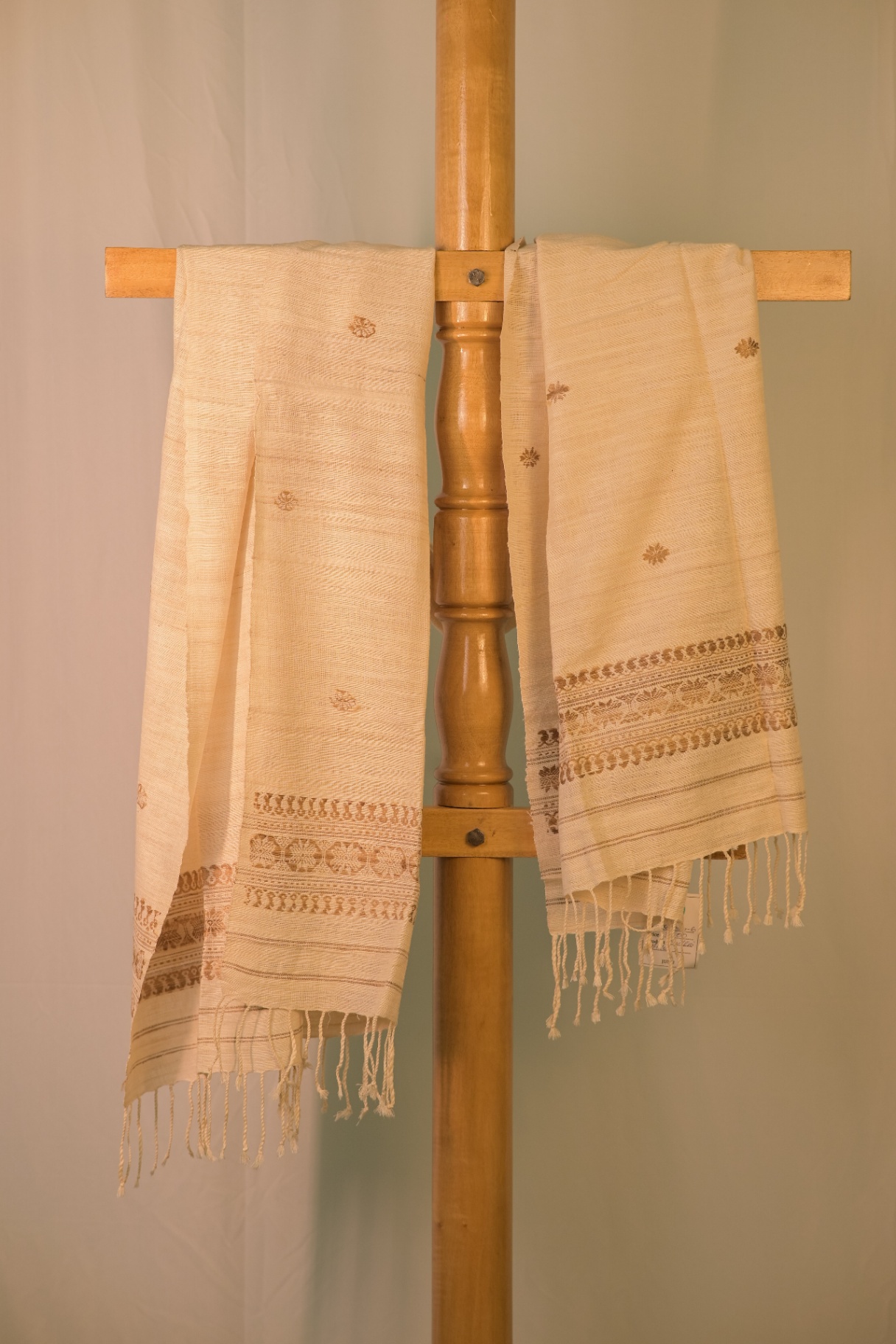
Peace silk lets the moth emerge from the cocoon first. The cocoon is then collected from the ground and handspun. The yarn is shorter, softer, with a natural slub — closer in feel to fine wool than to satin.
Eri, Assam's version.
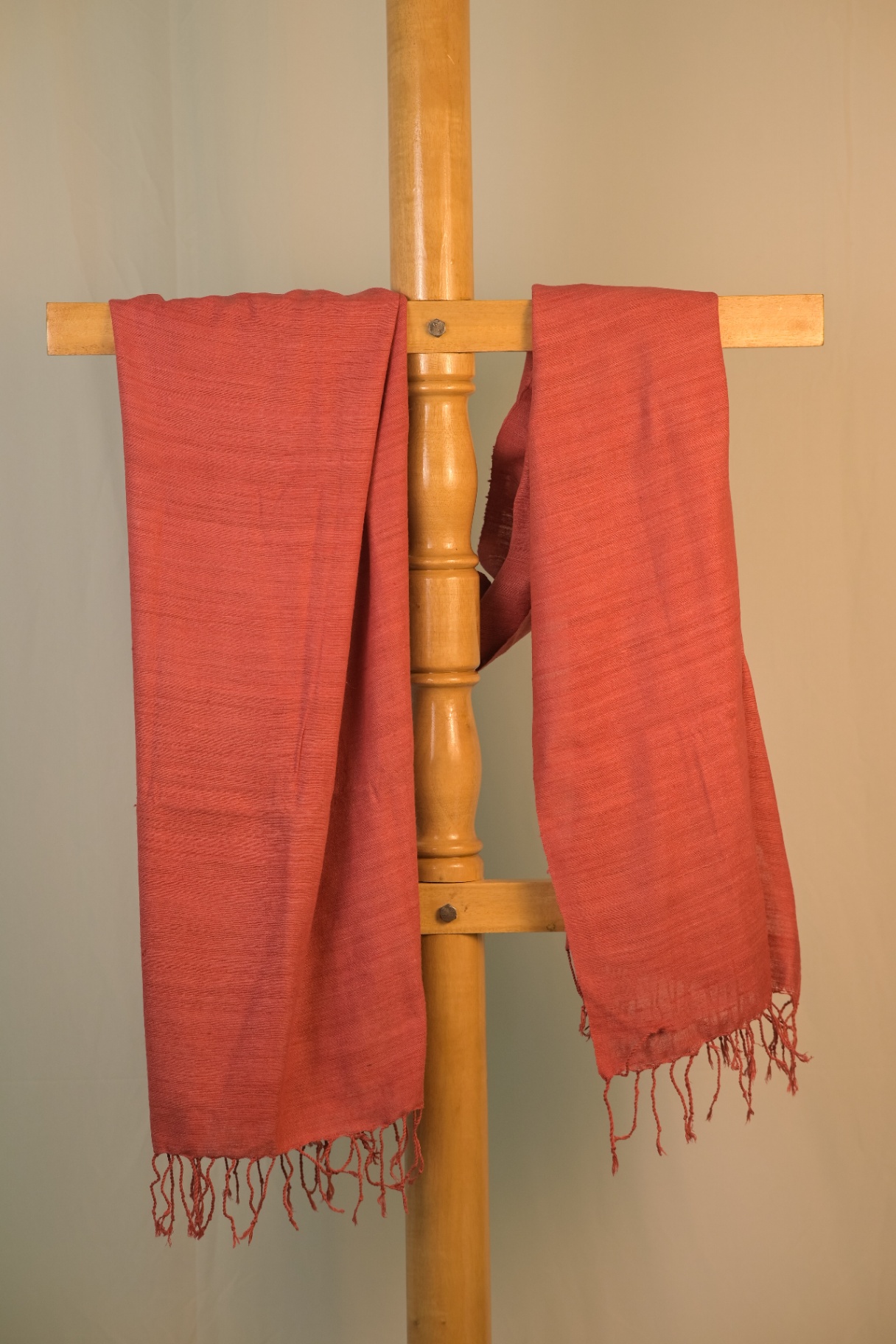
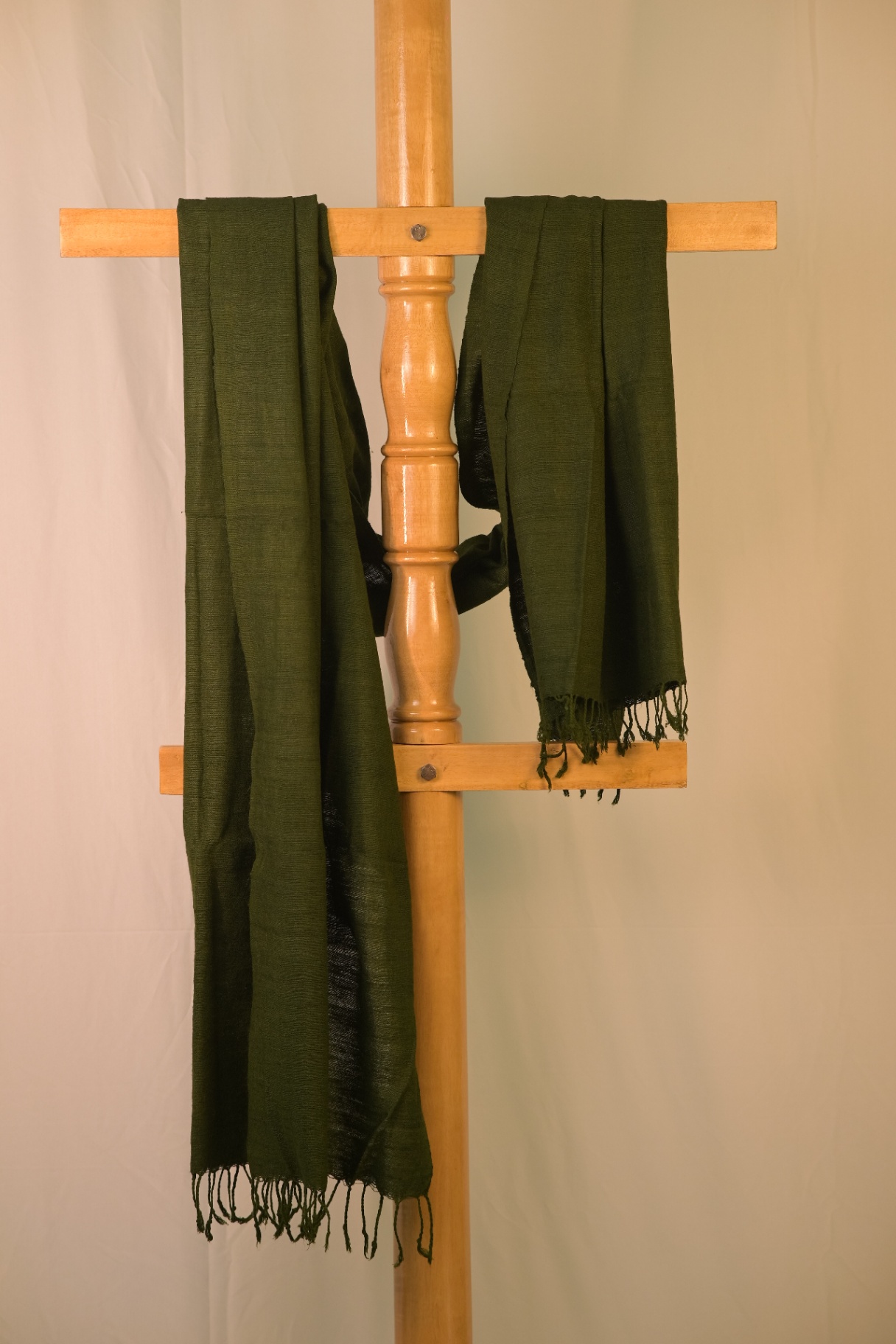
Eri is the peace silk that has always been woven in Assam. It is hardy, warm, and works year-round. Most of Adwita's Eri stoles are plant-dyed and finished by hand.
Is Eri silk vegan?+
Eri silk is not technically vegan because it comes from the silkworm's cocoon, but it is non-violent — the cocoon is collected only after the moth has flown out naturally.
How is peace silk different from regular silk?+
In conventional silk production, the silkworm is killed inside the cocoon to keep the long filament intact. Peace silk lets the moth emerge first and spins the broken cocoon into shorter, softer yarn.
Does peace silk feel like silk?+
Eri silk has a softer, more matte finish than mulberry silk. It is warm to the touch and has a subtle slub from being handspun.
Shop the edit
View all →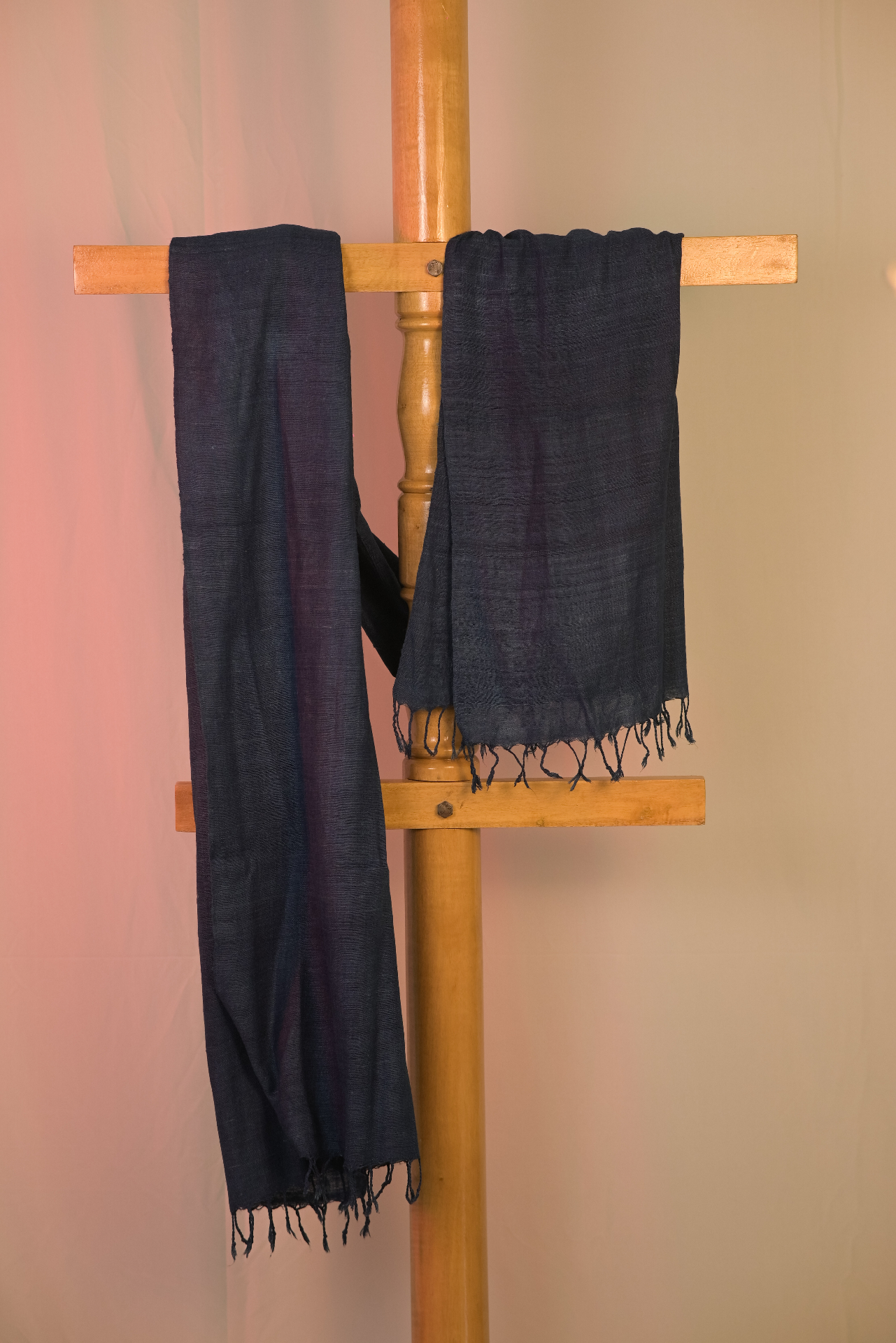
Made by hand. Made to last.
Each Adwita stole is woven slow in Assam. Free shipping over ₹3,500.
Shop Eri silk stoles